
Grace Ross Meldrum
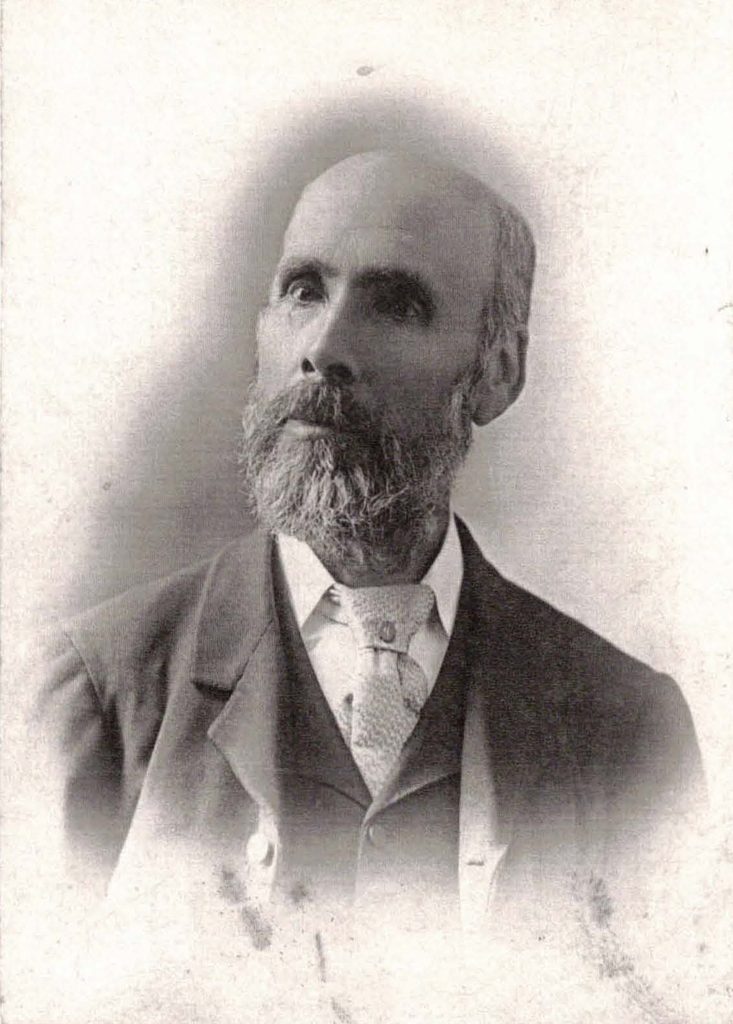
William James Meldrum came to Australia in 1862, a migrant from Broughshane, County Antrim, Northern Ireland. He was born on the 5th January 1844 in Broughshane, Northern Ireland, but his family were originally from Scotland. His parents and brothers and sisters all came out to Victoria together and settled first in Beechworth, Victoria and in 1867 William moved to Wangaratta, where he established a General Store.
Jane Alexander Hastings (Jeanie) was born on 26th May 1845 in Huntly, Aberdeen, Scotland, her parents were James Hastings and Hope Ann Ross. Hope Ann Ross was born in 1819 at Grantown, Inverness, Scotland, her parents were James Ross, a soldier and Margaret Grant. James Ross and Margaret eloped while she was at a boarding school, consequently both families disowned them. He was then “press-ganged” into the army, leaving his wife and family nearly destitute and the Grant’s looked after them, till James returned many years later. Hope married James Hastings in 1841 and they lived in Huntly, where they had eight children, all of whom came to Australia, except Reverand Doctor James Hastings (Dictionary Hastings). James and Hope arrived in Australia in 1883. They lived with there daughter, Margaret Chandler at Deniliquin, where James died in 1887. They then moved to Narromine and later to 42 Darlinghurst Rd. Sydney, where Hope Ann died in 1908.
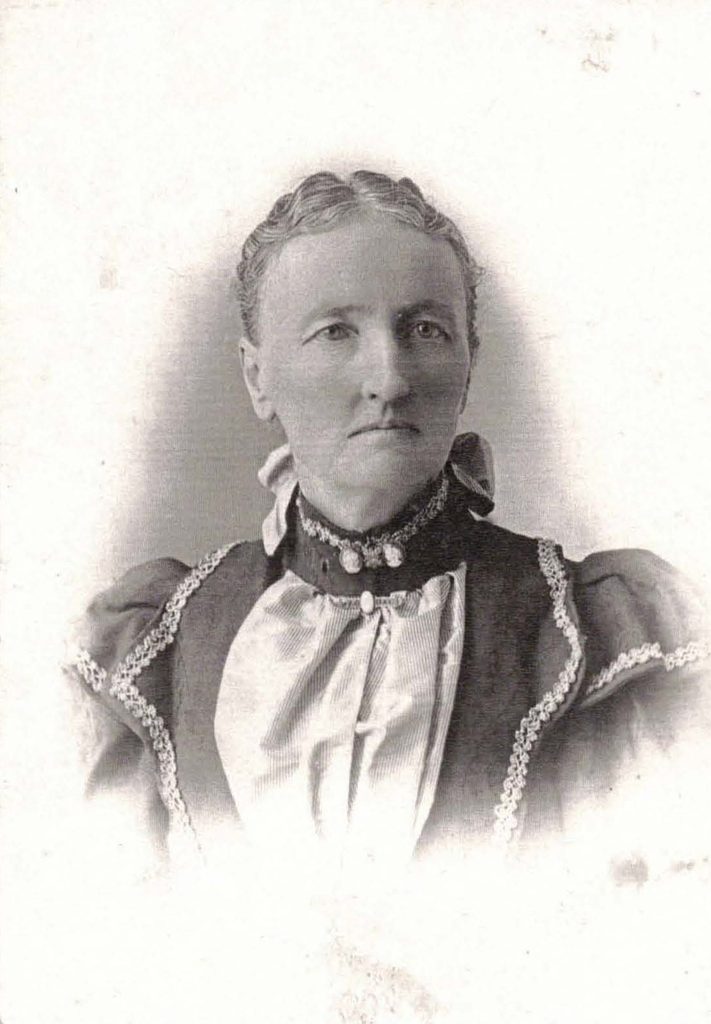
Jane (Jeanie) arrived in Australia on the same ship as William Meldrum in 1862, and she married Alexander Gilliland in 1869, but he died the following year, she then lived with her sister, Margaret Chandler who was a school teacher at Deniliquin and in 1871 she and William Meldrum married .
Their home was a large comfortable house on the banks of the King River, near its junction with the Ovens River. William also had a vineyard some miles out of Wangaratta where he employed a manager. Apparently the business flourished and they were a popular couple. William became involved in Municipal affairs and was Mayor of Wangaratta on four occasions, served as President and Secretary of the Management Committee of the Base Hospital, as well as being President of the Management Committee of the Presbyterian Church for twelve years.
Jeanie also was very busy, having nine children between 1872-1890. Six of these children survived and grew up.
James Thomas(1874), m. Ida Melrose
Gertrude(1877),
Ellen (Nell) Campbele (1879) m. Jock Weir
Grace Ross (1880), m. William Harrod
Arthur William(1882),
Jeanie ( 1885 ) . m. Thomas Meldrum (her cousin)
The children had a marvellous childhood, horses to ride, they all learned to swim at an early age, there was always plenty of help in the house etc. The girls and Arthur had a governess and James was sent to a Melbourne Boarding School.
This, then was the setting for the young Meldrums, until 1892-3, when a great Depression and Drought hit the country. Along with countless others William Meldrum’s business failed, largely because he had been carrying too many farmers’ bad debts. His properties were sold and the family moved to Junee in 1893 and he started all over again.
All this is just a background for a most wonderful person, Grace Ross Meldrum, the third daughter who was born on 5th.Sept.1880. Even at the age of six she must have been delightful and she carried this charm through her life, until her death in 1966 in her 86th. year.
A poem written to her on 6.8.86, by D.Hugh Evans on his way back to Melbourne after visiting the family, bears this out.
“To Grace Meldrum, Wangaratta 1886 .
My curly-headed maiden
Among the garden greens –
Grace is the sweetest, neatest thing
That brightens the bright scenes.
My sight made dim with age doth swim,
Remembering other days
As I behold her hair of gold
As with the wind it plays.
-o-
Age doth not seem so hard to bear
When Grace’s smile appears,
For then my heart her pleasure shares,
Though weighted down with years.
Our Grace among the graces still
Doth make my pulses start ,
A sweeter joy ne’er fill’d a boy
That now thrills through my heart.
-o-
When far from Grace my heart repines,
Her loving ways are sure
To bring more joys,to men and boys,
Than those far more mature;
Her winsome way makes all so gay,
She’s like a field of flowers;
When Summer breeze doth miss the trees,
That shine midst sunny showers.
-o-
Though far from Grace, I’ll sing her praise
And hope ere long to greet her,
With heartfelt joy without alloy –
I’ll pray, Oh’ soon to meet her
Until I do sweet Grace, adieu,
May God, whose child thou art,
Be ever near, thy soul to cheer
And fill with love thine heart;
-o-
Throughout her childhood Grace’s inseparable companion was her sister Nell. They were always dressed alike and seemed to have many adventures together. Their father quite often took the children out to the vineyard, when he was checking up on progress out there and she told me of one scary time when she and Nell were waiting at the cottage for Father’s return. It became dark and they wandered down to the gate, being too scared to stay in the cottage. Leaning over the gate, they suddenly heard a deep, rumbling noise which stopped after a couple of minutes, only to start up again shortly. This went on for quite a while, with two little girls becoming more frightened every minute. Father arrived in time to “save” them and laugh with them, when he explained that the noise was coming from a cow, whose stomach was rumbling as she chewed her cud.
The Meldrums lived in Ned Kelly country and were brought up with the idea that there was little good in the Kellys. Plenty of stories abounded, of course, one of which directly concerned them. It was the year 1879, the men of Wangaratta had news that the Kellys were going to raid a village nearby, as most of them rode out towards this place, William Meldrum amongst them. This meant Jeanie and three small children (Nell,a baby),a cook and two maids were left in the house, which was close to the main road over the Ovens River. They were all on edge of course, so imagine Jeanie’s horror when she heard a loud bang and then a scream from the kitchen area. She grabbed the baby pushed the children in a corner, stood in front of them and waited. A few minutes later there was hysterical laughter and the cook came in looking pretty foolish, to tell her that one of the girls had lifted the trapdoor down to the cellar, while the other one went down to get something. Accidently she dropped the door and they all screamed. Needless to say Ned Kelly didn’t go to the expected place, so all the men came home empty handed.
Grace was thirteen when the big upheaval took place and the family moved to Junee. Her great friend, brother James had left School and had gone to Egypt for several years. Gertrude had also left school and took over most of the housekeeping, while Nell, Grace and Jean went to a small private school in Junee. Later they were enrolled as day pupils at the Wagga Convent where they travelled up and back each day by train.
Grace did well at the Convent – Passed the Junior University Exam, in 1897 and the Senior U.E. in 1898, gaining passes in English, Ancient History, French, Music and Honours in Plane Geometry and Perspective.
When she left school, Grace wanted to become a nurse but instead of training, she had to nurse her mother who was ill at that time.
“Kinross”, the family home, must have been a happy household, with young people coming and going constantly.
As was usual at that time, the family took great interest in Church work and affairs of the town. It was an age of great social activity, they all played tennis, and the girls wore tennis frocks that were several inches off the ground, in spite of the fashion which ruled that women had no legs ! For tennis, Grace said that many of their friends wore wide hats with veils, gloves and had to use one hand to control the train on their skirts – some tennis! !
There were picnics, evenings at home where everyone sang or played a musical instrument and other forms of entertainment.
Although the Meldrums lived in the town, they had many friends in the country, so this meant visits and house parties. Travel was leisurely and so was life. Then there were occasional trips to Melbourne to visit relations and for shopping in the “big city”. Life continued on this even keel for some years. The four Meldrum girls were popular and had fun.
When Grace was twenty-two she met William Harrod, recently arrived in Junee to work as an Engineer in the Railway Workshop. He was in the Choir of the Presbyterian Church and she was the Organist. He was different to most of her friends but they became very friendly and eventually wanted to marry, only to find there was stiff opposition from her parents (particularly her mother), Grace was sent to Melbourne for an indefinite stay with friends – ( could we do this today! ! ) however all was not lost as they corresponded constantly and Will even managed a few trips to Melbourne to see her. Eventually her parents realized the young ones were really serious and gave in gracefully. Later both her Mother and Father realized Will’s worth and became very fond of him. He was a wonderful man with a loving heart and a tremendous sense of duty and loyalty. Will left the Railways and got a job in Port Chalmers , New Zealand .
Grace and Will were married at”Kinross”,on 18.5.1904. Once more we see how people felt about Grace by reading the poem the Presbyterian minister wrote her on the occasion of her marriage .
To Miss Grace Ross Meldrum.
” Today you leave your childhood home,
The sheltered sanctuary of your girlhood life:
To go with him you love and to assume
The sacred duties and the name of wife.
Could I but shower upon you magic gifts,
brave assurance that suns would shine always
This I would do : But no, and so I pray
That God will bless you, throughout all your days.“
The young couple left for Sydney by train and Grace met her husband’s family for the first time. Will was the only son of Jeremiah and Elizabeth Harrod and brother of five doting sisters, who were rather stiff, formal women, very different to Grace’s family and former friends. However in later years, when she got to know them she became very fond of them. The newly weds stayed in Sydney a few days and then left for New Zealand. What a trip it must have been !!! They were both very seasick and Grace was sad about leaving Australia. However she came to love N.Z. and always wished she could revisit it. Once more they both became involved in Church work and made many friends. Their first Winter in N.Z. must have been very hard. It was bitterly cold and for days on end snow was piled up around the house. Later they moved to another house right on the water’s edge at Sawyer’s Bay, ‘where the fishing was good. It must have been a depression time because hundreds of men were out of work and though Will was employed by the same firm for three years, the work was rationed, But they managed somehow. Their son, James William was born on 7.4.1905.
The Harrods stayed in N.Z. until 1907, then they came back to Sydney and settled in Balmain, where Will worked for Mort’s Dock Engineering Co. for some time and later started work in the Engineering Workshop at Sydney University. He stayed there until 1913, when he and his brother-in-law, Jock Weir formed a partnership and started the Engineering firm of Weir and Harrod, in Cary Street, Drummoyne. This firm is still functioning and is now at Meadowbank.
By this time the Harrods had three children, Doreen Hope 13.6.1908 and Ross Meldrum 6.1.1911, both born at Balmain. About 1912 they moved to Rozelle.
It was in 1914, when Australia entered the Great War that Grace Harrod started her career of service, but I’m sure she never thought of it as a career. A branch of the Australian Red Cross Society was formed at Rozelle and Grace became Secretary in 1915,a position she held throughout the War. The Branch was very busy and did a tremendous amount of hard work, supporting Broughton Hall Soldiers’ Hospital, making pyjamas, underwear socks etc. for the troops as well as the fundraising efforts which went on all the time. It was during this time that she made some life-long friends, the Grants, the Bournes and the Burns. When the War was over the members of the Branch presented Grace with a very handsome maple desk, which I now have.
In 1919 hard on the heels of the Armistice came the terrible Pneumonic Influenza Epidemic, with all its terror and tragedy. The Balmain-Rozelle area was hit badly, because of congested living conditions. A band of Red Cross women, led by Matron Dalley of Balmain started an Auxiliary Hospital in the Balmain Town Hall to try and cope with the overflow of patients from the Hospital. Grace was one of these workers and it was a heartbreaking task. We, her children, were all going to school by this time and I can remember her coming home exhausted and so mad at the stupidity and plain terror of some of the people. Conditions wouldn’t have become so bad had the people not panicked. We had a funny little old lady, Miss Turpin, who did our washing and cooked our evening meal. I can still remember her “suety pudding” dumplings with Golden Syrup poured over. How I hated them ! !
We moved to Drummoyne about 1920 and during the 20’s Grace was very interested and active in the newly formed Parents and Citizens Association of Sydney Boys High School, where Jim and later Ross were pupils. When the School was moved from Ultimo to Moore Park the P & C had a tremendous amount of work to do, raising money for extra equipment.
Those years we lived in Drummoyne must have been difficult ones. The Engineering Workshop was busy, but not prospering. Grace kept the books and coped with the office work at home. Will taught engineering Practice at Balmain Technical College two nights a week for many years. However we still managed to have plenty of fun, helped by our friends the Burns and the Bournes who had also moved to Drummoyne after the War and the Bridles whom Grace had known in Junee many years before.
In 1923 Grace received a small legacy from her Aunt Bella (Mrs Andrews of Cootamundra) and they used it to pay a deposit on a house in Gladesville, at 50 Prince Edward St, called Kinross after the home at Junee. We moved there in 1924 and both she and Will spent the rest of their lives there.
Jim and Ross did very well at school and eventually both went to Sydney University, Jim to graduate in Science and Electrical Engineering and Ross in Science. This was only possible because Jim gained a Bursary and Ross an Exhibition. I tagged along and passed the Leaving Certificate Exam from Fort Street Girls’ High School.
It was about this time that Grace became a voluntary worker at Blackfriars Infants’ School. This was in a very poor city area and voluntary workers went each day to provide lunch for the children. The Headmistress was a health fanatic and insisted on cleanliness to a point where it became ridiculous, even to washing the bananas before and after peeling and this in a locality where hygiene was practically unknown at the time. The children were given milk each day, but it was noticed that one small boy didn’t drink his – he had a bottle of clear liquid for lunch. Eventually one of the women asked him what it was and he said : “I don’t know, but Mum gives it to me.” She smelt it and found it was gin. When a Welfare Officer visited the parents he found out the boy’s father wanted him to become a jockey and the gin was to make sure he stayed small. These were the kind of people the school had to deal with.
Sometime in the 1930s, when the Anti-T.B. Association was formed Grace became a voluntary worker at the Clinic which was operated from an old house in Darlinghurst. She went there two days a week for years and in 1941 was made a “Life Governor of the Anti-T.B. Association of N. S. W. ‘When the Assn, was first formed it was run by a panel of interested Doctors( Grant, Calov etc.) all voluntary. The only paid staff was a Sister-in-Charge and later a Secretary as the Assn. grew. We heard some funny stories about patients, as well as sad ones. New patients were examined in the mornings. There were cubicles for them and the Sister would say; “strip to the waist, please”. Imagine her amusement one morning when her patient appeared “stripped to the waist” from his feet up. I wonder where he thought he kept his lungs !! I remember one night a number of us being pressed into service to go through the files to get them into alphabetical order – the Sister at that time had no idea what that meant and things were in an awful mess. If I remember correctly that night there were three engineers, two barristers, one architect and three others. But we got the files straight.
Grace worked very hard for the Assn., which had to rely on money raised by public efforts, including Annual Garden Parties and Concerts. I remember one such Concert held in Sydney Conservatorium of Music, to a capacity crowd. All the artists gave their services free including the Sydney Police Choir, which sang a stirring Chorus from Tannhausser – completely Flat. It was a riot, but nobody dared to laugh. This work continued until the N.S.W. Government took over the Anti-T.B. Association.
All this social work sounds rather grim, but actually we had plenty of fun. I can assure you we were never forgotten or neglected while Grace was busy with her voluntary work. Did the house always look perfect ! ! Certainly not, but that didn’t worry any of us unduly.
We all had illnesses, some involving hospitalisation in later years – Jim had a long spell in R.PA.H. at one time and I had almost a month in Balmain Hospital, just to mention two occasions. Grace visited us every day in hospital. The travelling must have been gruelling because it was all done by public transport in those days.
About 1928 we first became acquainted with the Britton family, Mrs.Britton, Sandy, Tissie and Harold. They had a holiday cottage at Collaroy beach and we all spent countless weekends with them, along with a large number of other young people. They were wonderful friends. Grace and Will enjoyed these weekends too, though Will didn’t go very often,- he preferred going to Tahmoor where he had a small shack.
After the Anti-T.B. work finished there was still plenty of work for Grace. World War 2 was underway so among other activities, she collected a group of older women to work making clothes for children in occupied countries of Europe. They met at our home in Gladesville every week (all day), collected second-hand clothing and materials from friends and made up hundreds of articles which they packed into cartons and sent overseas, mainly to Holland, Belgium and France via the Red Cross and Salvation Army. They called themselves the “Childrens’ Clothing Club” and each carton had a little message and address in it. They received a tremendous number of “thank you” letters, some in English, but mostly in foreign languages which Mrs Burns had translated for them. As well as making garments they held a number of stalls, at Wynyard Station, selling adult clothing that was too good to cut up. These brought in money to buy new materials and to include little gifts in the overseas parcels. Some of the regular workers were:- Miss Alice Harrod, Miss Laird, Mesdames Burns, Massey, Holland, Pearson, McPherson, Weir and Barnard and not one of them under the age of sixty.
This was gradually eased off after the War, so Grace became involved in the city Branch for the Homes for Incurables at Ryde. This Committee raised money by holding Bridge Parties (a game she greatly enjoyed) and other activities.
Have I made her sound like just a “do-gooder” ! ! because she wasn`t. She had a great sense of humour and loved people, could relate to young people just as easily as the older folk – ask anyone who knew her.
By this time we, her children, were married and she and Will had six grandchildren. They spent some time each year visiting Jim and Nell in Adelaide and Harry and me in Girilambone. Ross and Lorna lived near them in Hunters Hill, so saw them frequently. They were wonderful visitors, the children loved them and they became very popular with our friends in Girilambone.
In 1954 they celebrated their Golden Wedding Anniversary with a delightful party at “St.Malo” in Hunters Hill.
In November 1957 we were shocked to hear that Nell Harrod had died suddenly. It was the first break in our family and we were all terribly sad.
Early the next year Will suffered a stroke and became very hard to manage. Grace insisted on nursing him at home, but it became too much for her and she collapsed, she was taken to hospital and it was discovered she had T.B., so was transferred to the Page Clinic at Royal Prince Alfred Hospital. There she stayed for nearly 6 months and was then moved to the Picton T.B.Sanitorium for a further 4 months. During this time Ross and Lorna visited her every weekend. They were wonderful and it was a great comfort to Jim and me, who were so far away. As usual she made many friends among the other patients and kept busy with knitting, rug making and reading. Eventually she was cured and allowed to go home.
But it wasn’t the same now, because Will had died in March, while she was in R.P.A.H. and after 54 years Grace was alone.
Theirs had been a very happy marriage, I’m sure. Certainly they had had worrying times, sickness and the constant lack of money to do the things they wanted to do. Will had always been so interested in all her activities and had helped her a great deal. During the War they had both been members of the Volunteer Air Observers’ Corps and used to go on duty together in the City, at night. The Observers Post was at the top of the ‘Astor’ Flats in Macquarie St. and some pretty funny things happened. For one thing the owners of the flats hated the Post and made things as unpleasant for us as possible. We were not allowed to use the main lift, had to use the tradesmens’ one and to go to the toilet we had to go down to the basement which opened on to the street. That wasn’t very pleasant at perhaps 2a.m., in a city like Sydney in wartime.
Will’s main interests, apart from his family, were his work, his Church, particularly the Hunter’s Hill Congregational Church and his garden. He was such a dear.
Grace insisted on keeping the house and managed there very well, helped a great deal by Ross and Lorna. Ross called to see her every morning on his way to work and then again on his way home and Lorna was in touch with her almost every day. She had frequent visitors, went out quite often and still visited Adelaide and Girilambone often.
Jim, Ross, Lorna and I were with her when she died, on 11th. August 1966, after a short illness. She was in her 86th, year.
This year 1980 is the Centenary of her birth. I am sending each of you this brief account of her life so that you who knew her may remember and your children may know what a remarkable and loving woman Grace Ross Harrod was.
D.H. Skinner
Doreen H. Skinner
Normanhurst 1980